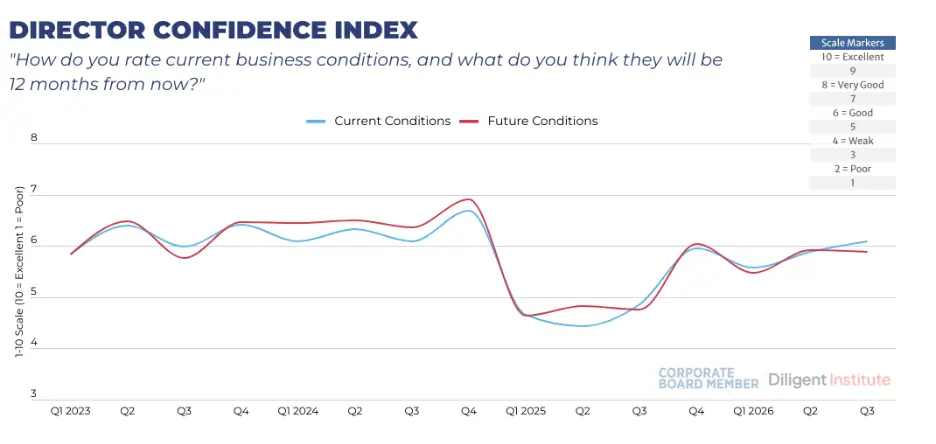
Director Confidence Hits 2-Year High As Optimism Fades
Corporate Board Member’s latest poll of public company board members finds directors positive on the current business environment, but more guarded about what comes next.

Corporate Board Member’s latest poll of public company board members finds directors positive on the current business environment, but more guarded about what comes next.

Audit committees have an opportunity to gain insight into the priorities that will shape audit oversight, investor protection and confidence in the capital markets for years to come. Here are four key developments.

By understanding the proposal and its potential implications now, audit committees position themselves to navigate regulatory changes while continuing to support transparency and accountability.

AI productivity numbers are green. Whether your workforce is amplifying or eroding remains invisible. That gap belongs on the board pack.
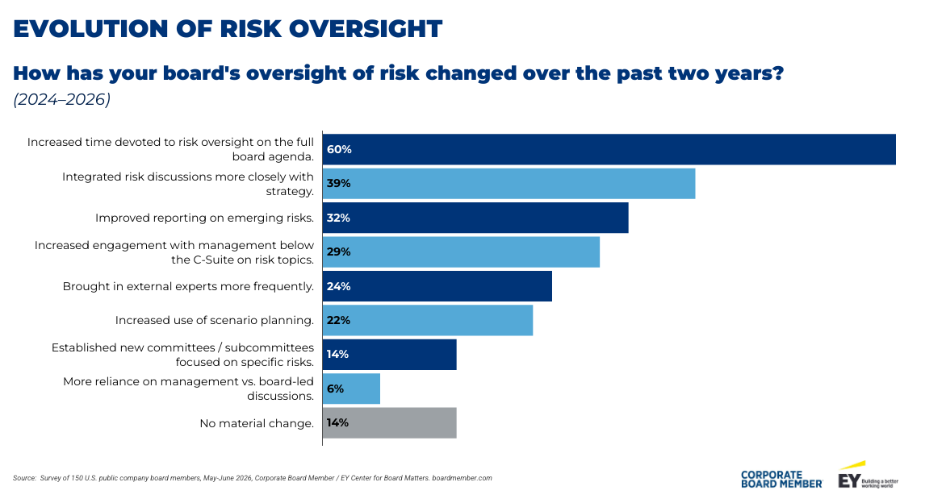
New research from Corporate Board Member and EY Center for Board Matters finds boards are devoting more time to risk and largely satisfied with the information they receive. The bigger challenge: turning those insights into strategic action.

Directors should begin discussing where they stand on this issue and how they might deal with shareholder interactions going forward.

In a new book, bestselling author James Patterson’s lifetime of upending the status quo offers a roadmap for leaders stuck in neutral.
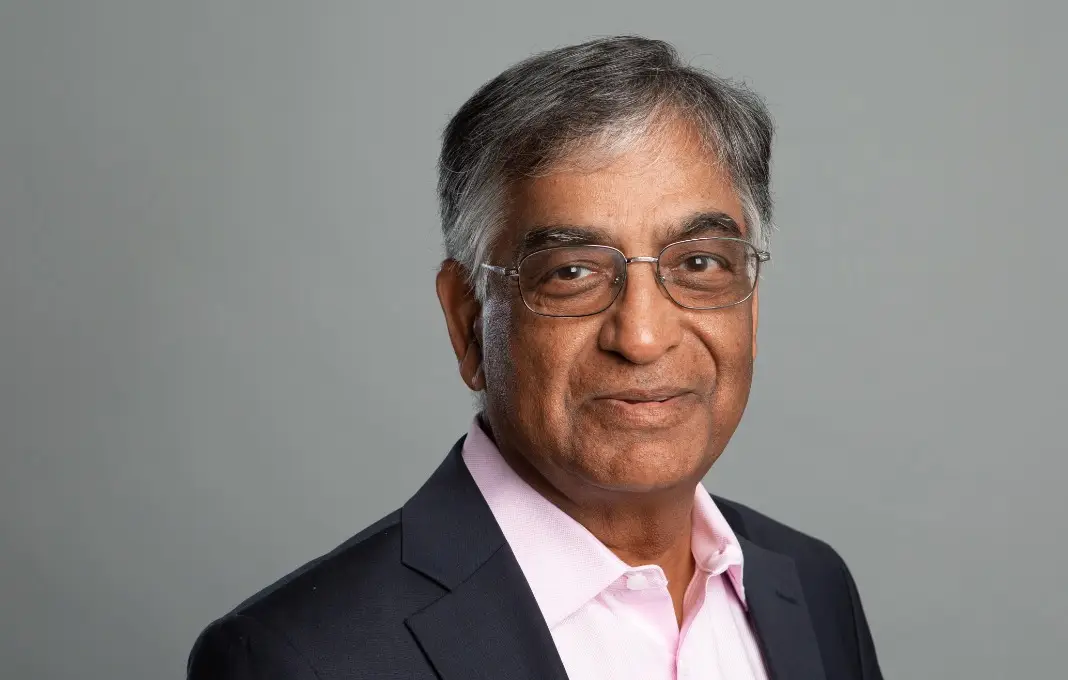
Raj Gupta, veteran of 15 public company boards, including Hewlett-Packard, DuPont, Tyco, Arconic, Airgas and Delphi/Aptiv, says a new era of disruption requires a new kind of governance. More strategic. More engaged. More focused. His playbook for a brittle, anxious, nonlinear and incomprehensible world.

With informers and subpoenas, the Trump administration wants to root out preferences of any kind.

As history shows, boards that cling to static models risk falling behind. Here are six strategic moves to help boards refresh their composition, stay ahead of disruption, and build governance fit for the future.

An M&A surge has seemed imminent for years, but even a more favorable regulatory environment, increased private equity sales and strong corporate balance sheets may not be enough to get things going in 2026.
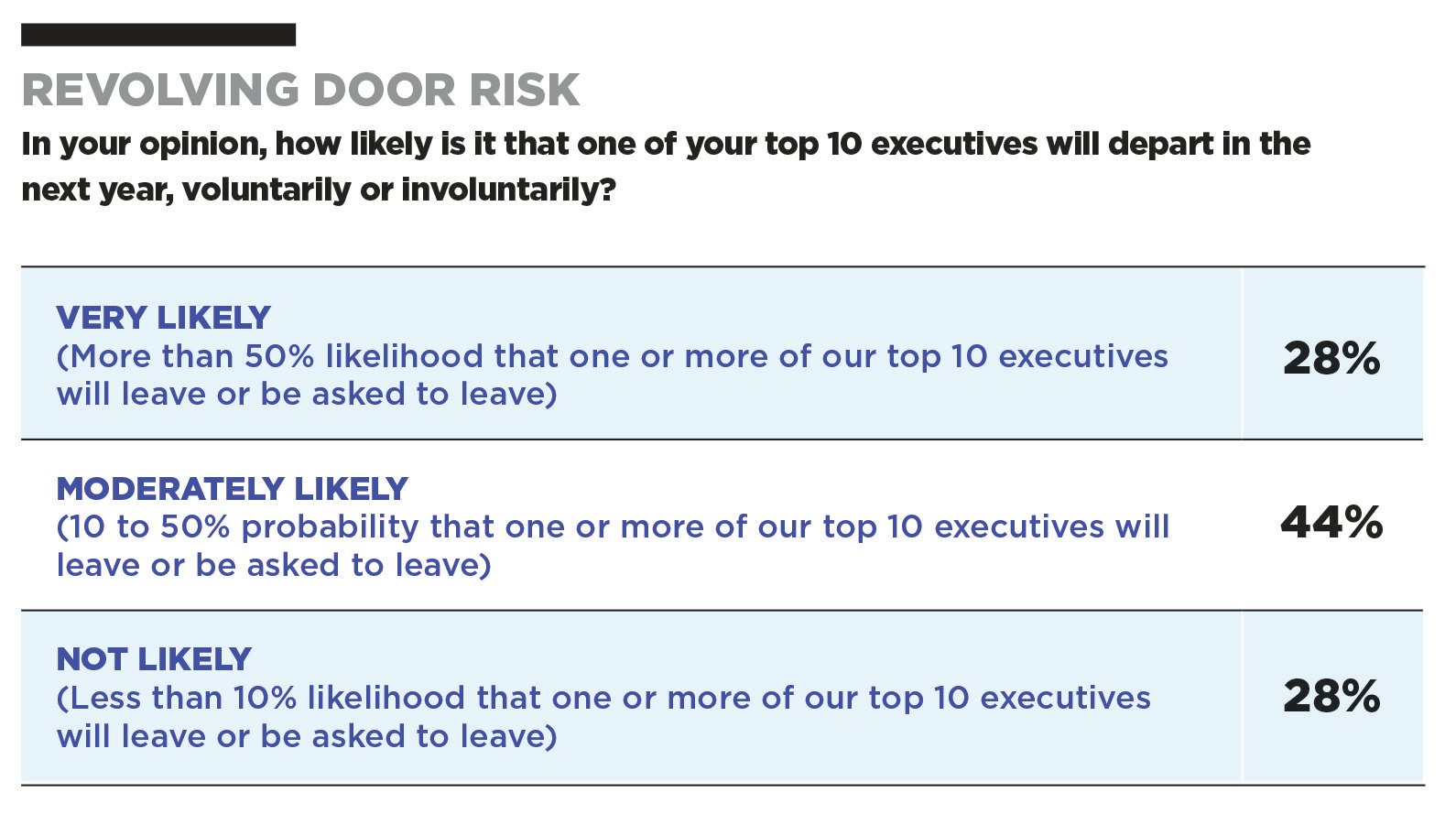
Record-high turnover at the top hasn’t unnerved boards, but a new survey by Corporate Board Member and Farient Advisors points to potential vulnerabilities.

For AI, boards need a repeatable oversight discipline, not a collection of presentations about pilots. Answering these five questions can help.

As science, technology and other specialized capabilities become more central to strategy, boards need to ask whether their own expertise and oversight have kept pace. The beauty industry offers a revealing case study.

S&P 500 boards appointed fewer directors this year, but more of these new directors have proven executive leadership experience. Here’s what corporate board members might want to consider.

Carrying reasoning and decision history forward is becoming more urgent as directors adopt AI tools faster than boards establish policies for their use.

Such minimal support of anti-DEI proposals across several categories indicates shareholder interest in this issue appears to be waning.

Allbirds’ dramatic transformation into an AI infrastructure company highlights a question more boards may soon face: When does protecting shareholder value require abandoning the original business model altogether?
AI productivity numbers are green. Whether your workforce is amplifying or eroding remains invisible. That gap belongs on the board pack.

AI hasn’t just made lies easier to produce. It’s made the truth harder to defend—and that makes credibility a capital asset CEOs must govern like infrastructure.

Used well, AI can turn bloated board books into real intelligence, surface hidden risks and bias, and help directors challenge management’s plans; used poorly—or not at all—it can leave boards exposed, behind competitors and vulnerable to new forms of legal and ethical scrutiny.

Independent director Jeanne Beliveau-Dunn says the boards that will win with AI are not the ones chasing shiny tools, but those using them to deepen oversight, sharpen risk governance and push management toward data-informed, future-focused decisions.

Peer-juried award, presented in partnership with AlixPartners, recognizes independent director who steadied Royal Caribbean through its record post-Covid recovery.

BP’s leadership turmoil may look like a hiring problem, but it points to a deeper governance challenge, with research suggesting boards spend enormous effort selecting leaders and far too little helping them succeed.
New research from Corporate Board Member and EY Center for Board Matters finds boards are devoting more time to risk and largely satisfied with the information they receive. The bigger challenge: turning those insights into strategic action.

If your ‘AI strategy’ lives separately from your value creating strategy you can have internal competition, not convergence.

Sixty percent of directors say their boards have increased time on risk oversight over the past two years—but fewer than half report closer integration with strategy.

Against a backdrop of accelerating disruption across technology, geopolitics and talent markets, making ever-faster, high-stakes decisions with increasingly imperfect information is the norm. Here’s how six CEOs are adapting.

Quarterly reviews often fixate on past performance, but CEOs and board chairs who deliberately carve out time for strategy can unlock the board’s full potential as a driver of long-term growth.

Spring, summer, fall, winter. McKinsey’s Carolyn Dewar on how directors can help their chief executive succeed at every stage of their ‘year.’

As AI reshapes business performance, compensation committees face new governance questions around measurement integrity, accountability and whether existing incentive frameworks still reflect how value is created.

Organizations that reassess their compensation programs as the fall planning cycle gets underway are better positioned to make pay decisions that are competitive, consistent, financially responsible and aligned with business performance.

Even in an environment of expanding data and analytical tools, compensation committee decisions continue to depend on directors’ ability to evaluate evidence, reconcile differing perspectives and exercise discernment.

Compensation committees balance pay rigor, flexibility and transparency as investors increasingly evaluate executive pay in less predictable ways.
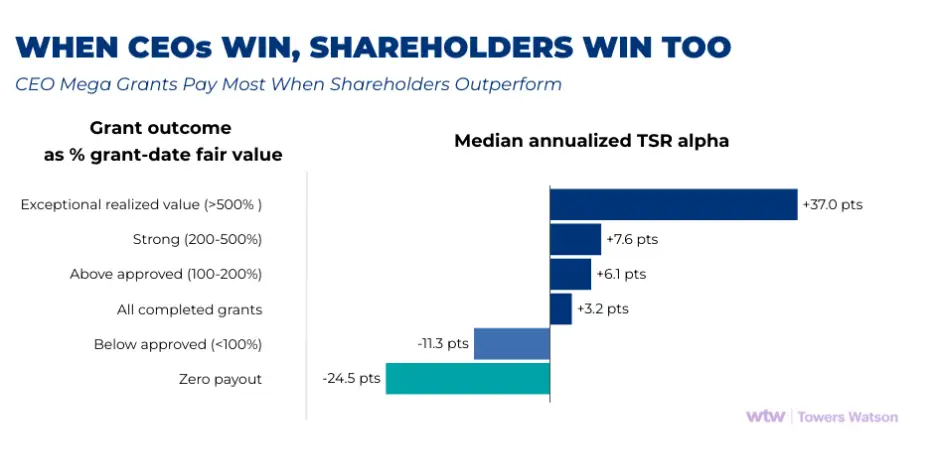
CEO mega grants almost never fail on performance design. They fail on succession risk—and boards are still asking the wrong questions.

Organizations must adopt different talent and compensation strategies for frontier AI creators, product builders, and AI-enabled workforces.
AI productivity numbers are green. Whether your workforce is amplifying or eroding remains invisible. That gap belongs on the board pack.
For AI, boards need a repeatable oversight discipline, not a collection of presentations about pilots. Answering these five questions can help.
AI hasn’t just made lies easier to produce. It’s made the truth harder to defend—and that makes credibility a capital asset CEOs must govern like infrastructure.

Critical design thinking paves the way for successful adoption.
As science, technology and other specialized capabilities become more central to strategy, boards need to ask whether their own expertise and oversight have kept pace. The beauty industry offers a revealing case study.

AI delivers measurable productivity gains for individuals but relatively few companies convert those gains into business value. The way organizations structure incentives may be the key to unlocking value.

The number two role offers an extraordinary vantage point and genuine preparation for the top job. But the moment the promotion happens, the structure changes, the exposure expands and the decisions carry a different weight.

The biggest opportunity is emerging before the search begins.

The central question is no longer whether your board has the right leader at the top, but whether your board has the lens to know.
BP’s leadership turmoil may look like a hiring problem, but it points to a deeper governance challenge, with research suggesting boards spend enormous effort selecting leaders and far too little helping them succeed.

The board’s smooth Cook–Ternus handoff was the product of years of disciplined pipeline building, culture oversight and honest CEO–board dialogue that most companies never get around to.

CEO turnover creates uncertainty fast, especially when employees lose sight of the company’s core values. Organizations that anchor operational change to cultural continuity are better positioned to maintain trust and momentum.
Directors should begin discussing where they stand on this issue and how they might deal with shareholder interactions going forward.

Showing up during times of transition, with empathy and sincerity, will do more for trust than any polished talking points ever could.

Communication during disruption is not simply a management function but a governance responsibility.

As investor influence expands beyond earnings season, companies need better ways to control their narrative.

Boards should lean into early shareholder engagement, tighter legal framing and proactive transparency on workforce metrics to reduce litigation risk and preserve flexibility.

How vote projections guide board decision-making on proxy proposals.

Even as boards face rising pressure from anti-DEI activists, directors can safeguard board diversity by shifting from easily attacked written policies to resilient, performance-driven selection practices.

The difference between ‘useless’ and ‘fantastic’ isn’t always performance—sometimes it comes down to chemistry.
With informers and subpoenas, the Trump administration wants to root out preferences of any kind.

In today’s climate of volatility and reinvention, boards that view workforce planning as an HR sidebar are missing a vital lever for value creation.
How boards can understand, oversee and hold management accountable for building and sustaining a resilient corporate culture.

A new workforce study shows today’s workers are feeling the squeeze from flatter management layers, tighter salaries and more.

Corporate board members might want to consider the following to offset some of the risks associated with shareholder lawsuits that seek to hold directors personally liable for losses.

Given the restrictive governance structure SpaceX is pursuing, boards might consider asking some of the following questions at their next meeting.

With this IBM settlement under its belt, the DOJ may continue its anti-DEI enforcement efforts at an accelerated pace. What boards should consider.

Companies doing business in the EU face a slew of broad, demanding reporting requirements—with possible enforcement by Delaware courts.
Boards should lean into early shareholder engagement, tighter legal framing and proactive transparency on workforce metrics to reduce litigation risk and preserve flexibility.
Meta just paid $190 million to settle a privacy lawsuit—and it won’t be the last. With privacy laws multiplying across the globe and AI raising new risks, boards need to make three critical moves before 2026.
Given the restrictive governance structure SpaceX is pursuing, boards might consider asking some of the following questions at their next meeting.

Shareholder activism is on the rise and could accelerate under the Trump administration, which will bring new focus to the role of proxy advisory firms.

Elon Musk’s recent bid for the Tesla board to invest in his new AI startup leads to questions about where boards should draw the line.

A letter the shareholders sent to the board suggests several factors that might have influenced these directors to step down.

The possibility of a CEO using or abusing illegal substances or prescription drugs presents several questions for the boardroom.

C-Suites will soon be responsible for integrating modern sustainability strategies within their organizations’ financial reporting—and boards will be responsible for oversight—but many don’t know where to start or how to track emissions.

As more companies consider reorganizing their boards to better compete in an extremely unpredictable marketplace, it’s important for board members to proactively take stock of their expertise.

New appointments highlight a strong preference for seasoned leaders with global and cross-sector expertise—prompting fresh questions about board succession and generational balance.

New to board service? These recommendations can help put you on the right foot in your first role—and serve as a guide for improvement.

From intensifying shareholder expectations to ever-evolving technology and pricing strategies, directors share insights on navigating the cross-currents facing today’s boards.

From sports achievement and political stardom to stellar service in corporate boardrooms, J.C. Watts shares the elements of an approach that has made him America’s top value-creating director. ‘If there’s no integrity, strategy doesn’t matter.’

The ruling may ease some directors’ minds, but it doesn’t mean the end to similar lawsuits in the future. Here’s what boards should consider now.