As Board AI Use Rises, Rules And Oversight Remain Scarce
A new survey by Corporate Board Member and Diligent Institute finds boardroom adoption rising while formal governance continues to lag.
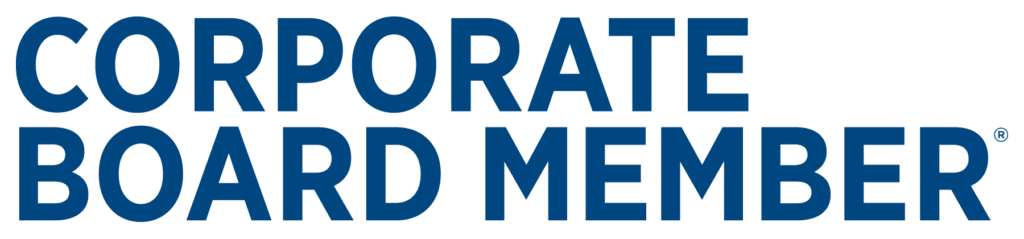

A new survey by Corporate Board Member and Diligent Institute finds boardroom adoption rising while formal governance continues to lag.

As investor stewardship becomes more technology-enabled, successful outcomes will depend on these factors.

Boards that treat cybersecurity as a compliance issue will stay stuck in reactive mode. But the starting point for strategic capability is simpler than most directors assume.

As technology transforms how companies compete, grow and operate, how should adoption flow through to pay practices?
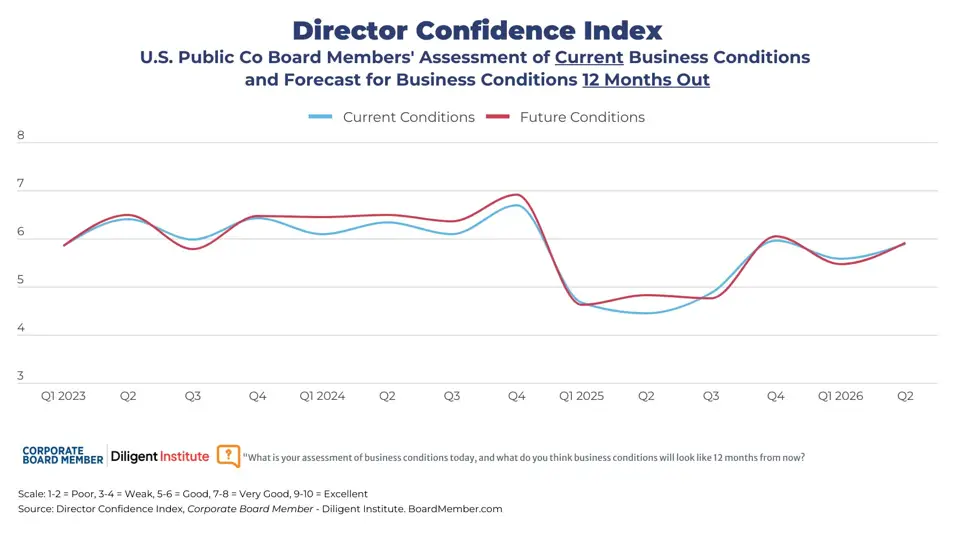
Our latest polling finds public company board members more confident in current business conditions than they were earlier this year but unclear about the future.

Treating AI as a smarter board book will miss the point, says technologist Florin Rotar: The real shift is using it to change how directors prepare, question and decide.

In a new book, bestselling author James Patterson’s lifetime of upending the status quo offers a roadmap for leaders stuck in neutral.

Raj Gupta, veteran of 15 public company boards, including Hewlett-Packard, DuPont, Tyco, Arconic, Airgas and Delphi/Aptiv, says a new era of disruption requires a new kind of governance. More strategic. More engaged. More focused. His playbook for a brittle, anxious, nonlinear and incomprehensible world.

With informers and subpoenas, the Trump administration wants to root out preferences of any kind.

As history shows, boards that cling to static models risk falling behind. Here are six strategic moves to help boards refresh their composition, stay ahead of disruption, and build governance fit for the future.

An M&A surge has seemed imminent for years, but even a more favorable regulatory environment, increased private equity sales and strong corporate balance sheets may not be enough to get things going in 2026.
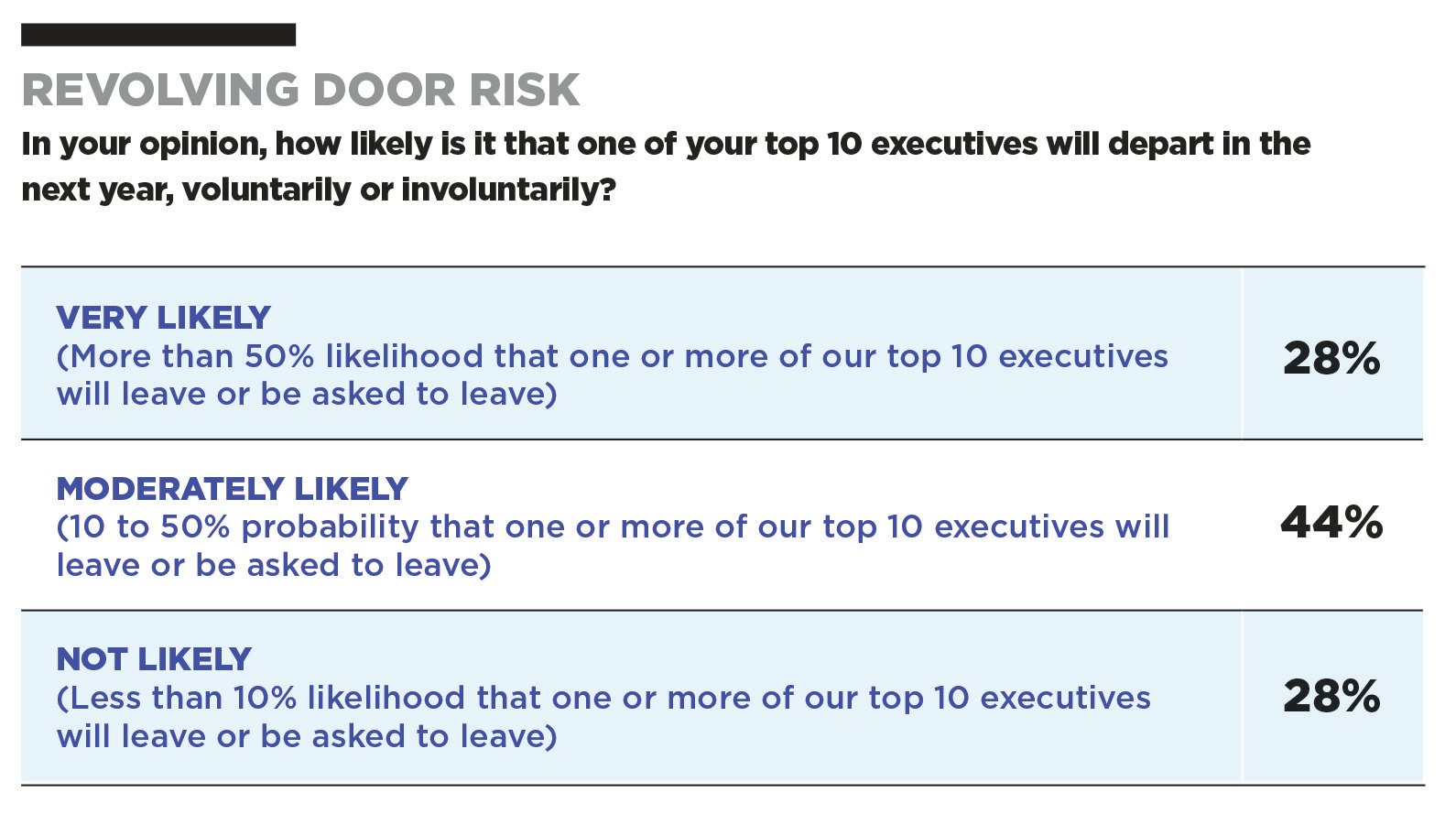
Record-high turnover at the top hasn’t unnerved boards, but a new survey by Corporate Board Member and Farient Advisors points to potential vulnerabilities.
A new survey by Corporate Board Member and Diligent Institute finds boardroom adoption rising while formal governance continues to lag.
As investor stewardship becomes more technology-enabled, successful outcomes will depend on these factors.

Given the restrictive governance structure SpaceX is pursuing, boards might consider asking some of the following questions at their next meeting.

With the rise of agentic AI, implementing comprehensive governance is more important than ever.

Today’s governance gap isn’t about compliance mechanics but about behavior in the room—boards that consciously design information flows, norms and succession practices are better positioned to steer through volatility.

Quarterly reviews often fixate on past performance, but CEOs and board chairs who deliberately carve out time for strategy can unlock the board’s full potential as a driver of long-term growth.
Treating AI as a smarter board book will miss the point, says technologist Florin Rotar: The real shift is using it to change how directors prepare, question and decide.

Overloaded directors, slow risk response and gaps on digital transformation are hampering board performance. Consider these fixes.

Independent director Marissa Andrada on sharpening strategy, reshaping board composition and using culture and technology to sustain profitable growth at the nearly 90-year-old doughnut company.

Can mission, vision and innovation ever create more value for a company than replicating marketing, cost-cutting and financial strategies that have proven effective in the past?
Today’s governance gap isn’t about compliance mechanics but about behavior in the room—boards that consciously design information flows, norms and succession practices are better positioned to steer through volatility.
Quarterly reviews often fixate on past performance, but CEOs and board chairs who deliberately carve out time for strategy can unlock the board’s full potential as a driver of long-term growth.

Against a backdrop of accelerating disruption across technology, geopolitics and talent markets, making ever-faster, high-stakes decisions with increasingly imperfect information is the norm. Here’s how six CEOs are adapting.
Quarterly reviews often fixate on past performance, but CEOs and board chairs who deliberately carve out time for strategy can unlock the board’s full potential as a driver of long-term growth.

Spring, summer, fall, winter. McKinsey’s Carolyn Dewar on how directors can help their chief executive succeed at every stage of their ‘year.’
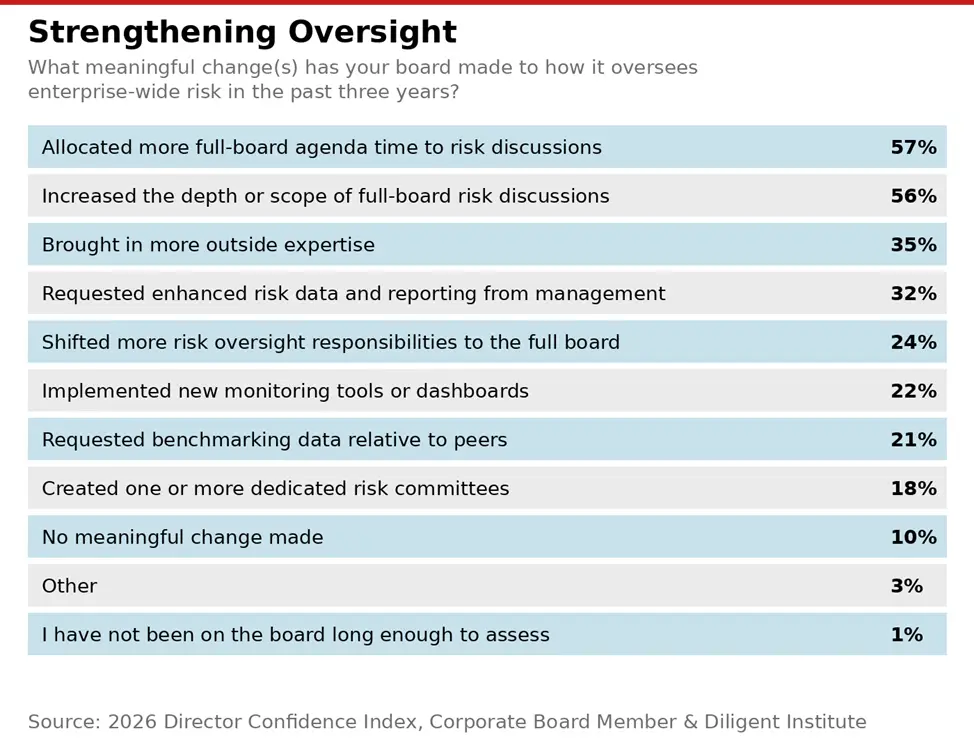
Boards are already moving toward more continuous, forward‑looking governance, but the next phase will demand bolder changes to agendas, data, tools and talent.

More than a third of large organizations are undergoing business transformations at any given time, but only about 12 percent achieve their original ambition. Here’s what goes wrong, and how boards can help.

How board members can guide sustainable, human-centered organizational change.
As technology transforms how companies compete, grow and operate, how should adoption flow through to pay practices?

A well-crafted STI plan is a powerful tool for focusing leadership attention, reinforcing strategic priorities and translating operational performance into pay outcomes.

A switch to semiannual reporting isn’t just a procedural shift; it could change how companies manage executive pay, disclosure and insider trading.

A negative say-on-pay outcome is not predetermined, as timely action and clear communication can still shape the final vote outcome.

Great pay decisions are the result of deliberate planning. Yet, most compensation committees lack dedicated time outside the annual cycle to revisit and pressure test design before it breaks.
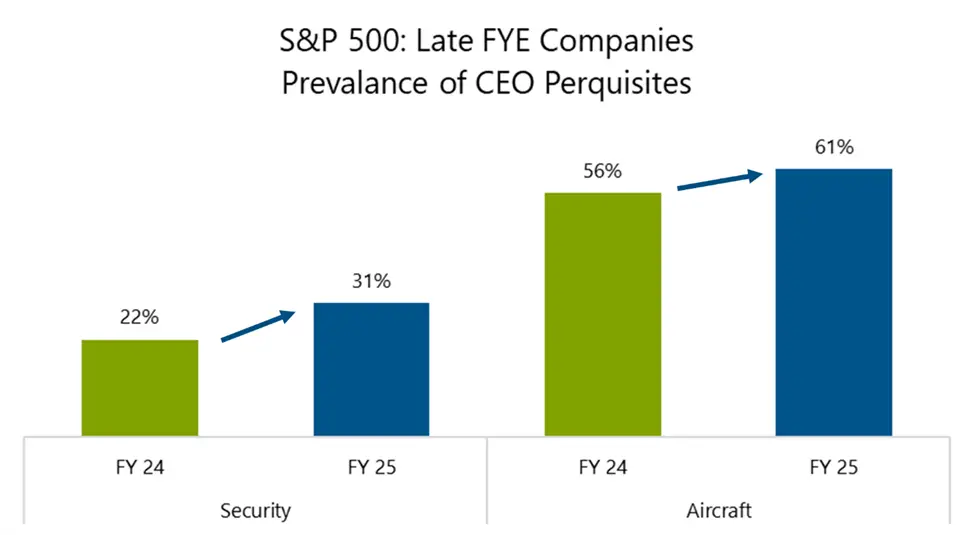
A review of 37 S&P 500 proxy filings shows continued growth in CEO security perquisites, evolving language around ESG and DEI, and limited tariff impacts on executive pay.
A new survey by Corporate Board Member and Diligent Institute finds boardroom adoption rising while formal governance continues to lag.
Treating AI as a smarter board book will miss the point, says technologist Florin Rotar: The real shift is using it to change how directors prepare, question and decide.
With the rise of agentic AI, implementing comprehensive governance is more important than ever.
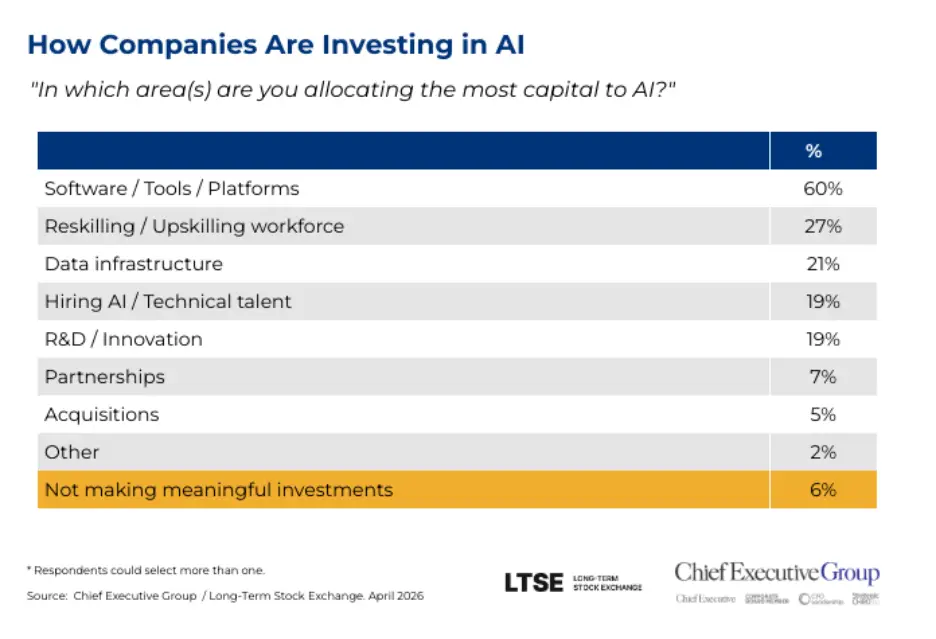
A new Chief Executive Group – Long-Term Stock Exchange survey of CEOs and board members finds lots of AI excitement and investment, as well as worrisome gaps in governance, strategy and safety.
Boards are already moving toward more continuous, forward‑looking governance, but the next phase will demand bolder changes to agendas, data, tools and talent.

AI isn’t just changing what companies do. It’s dismantling how they’re built—and boards need to govern the redesign.

The board’s smooth Cook–Ternus handoff was the product of years of disciplined pipeline building, culture oversight and honest CEO–board dialogue that most companies never get around to.

CEO turnover creates uncertainty fast, especially when employees lose sight of the company’s core values. Organizations that anchor operational change to cultural continuity are better positioned to maintain trust and momentum.
More than a third of large organizations are undergoing business transformations at any given time, but only about 12 percent achieve their original ambition. Here’s what goes wrong, and how boards can help.

Aligning pay programs with succession planning can facilitate smooth transitions, protect your leadership pipeline and prevent costly, reactive decisions.

Four ways boards can identify CEOs with the judgment, agility and enterprise leadership required to navigate an unpredictable future.

From unexpected exits to activist pressure, boards are facing more CEO transitions. Planning for an interim leader could be your smartest move.

Showing up during times of transition, with empathy and sincerity, will do more for trust than any polished talking points ever could.

Communication during disruption is not simply a management function but a governance responsibility.

As investor influence expands beyond earnings season, companies need better ways to control their narrative.

Boards should lean into early shareholder engagement, tighter legal framing and proactive transparency on workforce metrics to reduce litigation risk and preserve flexibility.

How vote projections guide board decision-making on proxy proposals.

The targeted companies (and others) will now need to determine whether their company is engaged in any controversial social issues and develop strategies to defend against having their business policies labeled as “woke,” or worse, illegal.

Even as boards face rising pressure from anti-DEI activists, directors can safeguard board diversity by shifting from easily attacked written policies to resilient, performance-driven selection practices.

The difference between ‘useless’ and ‘fantastic’ isn’t always performance—sometimes it comes down to chemistry.
With informers and subpoenas, the Trump administration wants to root out preferences of any kind.

In today’s climate of volatility and reinvention, boards that view workforce planning as an HR sidebar are missing a vital lever for value creation.

How boards can understand, oversee and hold management accountable for building and sustaining a resilient corporate culture.

A new workforce study shows today’s workers are feeling the squeeze from flatter management layers, tighter salaries and more.
Given the restrictive governance structure SpaceX is pursuing, boards might consider asking some of the following questions at their next meeting.

With this IBM settlement under its belt, the DOJ may continue its anti-DEI enforcement efforts at an accelerated pace. What boards should consider.

Companies doing business in the EU face a slew of broad, demanding reporting requirements—with possible enforcement by Delaware courts.
Boards should lean into early shareholder engagement, tighter legal framing and proactive transparency on workforce metrics to reduce litigation risk and preserve flexibility.

Meta just paid $190 million to settle a privacy lawsuit—and it won’t be the last. With privacy laws multiplying across the globe and AI raising new risks, boards need to make three critical moves before 2026.

Research suggests proxy advisors’ influence on shareholder votes is far more limited than critics claim, raising questions about whether restrictive executive orders are the right policy response.
Given the restrictive governance structure SpaceX is pursuing, boards might consider asking some of the following questions at their next meeting.

Shareholder activism is on the rise and could accelerate under the Trump administration, which will bring new focus to the role of proxy advisory firms.

Elon Musk’s recent bid for the Tesla board to invest in his new AI startup leads to questions about where boards should draw the line.

A letter the shareholders sent to the board suggests several factors that might have influenced these directors to step down.

The possibility of a CEO using or abusing illegal substances or prescription drugs presents several questions for the boardroom.

C-Suites will soon be responsible for integrating modern sustainability strategies within their organizations’ financial reporting—and boards will be responsible for oversight—but many don’t know where to start or how to track emissions.

As more companies consider reorganizing their boards to better compete in an extremely unpredictable marketplace, it’s important for board members to proactively take stock of their expertise.

New appointments highlight a strong preference for seasoned leaders with global and cross-sector expertise—prompting fresh questions about board succession and generational balance.

New to board service? These recommendations can help put you on the right foot in your first role—and serve as a guide for improvement.

From intensifying shareholder expectations to ever-evolving technology and pricing strategies, directors share insights on navigating the cross-currents facing today’s boards.

From sports achievement and political stardom to stellar service in corporate boardrooms, J.C. Watts shares the elements of an approach that has made him America’s top value-creating director. ‘If there’s no integrity, strategy doesn’t matter.’

The ruling may ease some directors’ minds, but it doesn’t mean the end to similar lawsuits in the future. Here’s what boards should consider now.