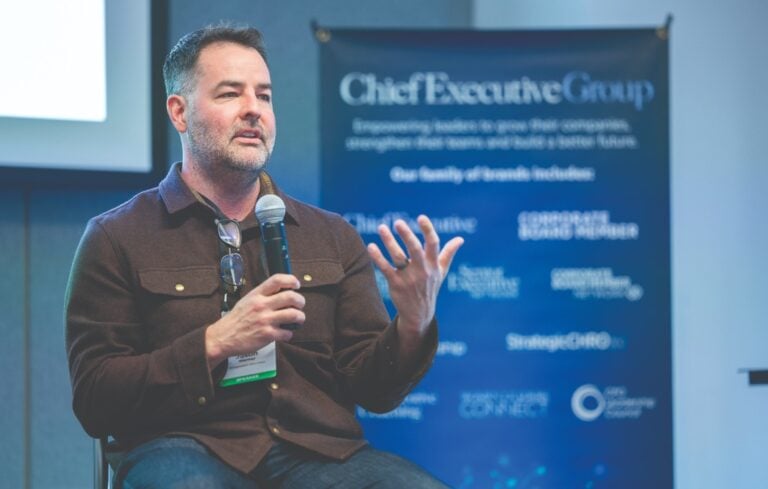


Artificial intelligence is rapidly reshaping how boards access information, evaluate risk, and guide strategy, but its role in the boardroom is still taking shape in practice. For Jeanne Beliveau-Dunn, an independent director at Columbus McKinnon, Edison International and Crewdle, the shift is less about adopting flashy new tools and more about embedding AI into the core disciplines of governance: oversight, risk management, and long-term value creation. Across sectors with very different regulatory and operational pressures, she is seeing firsthand how boards are beginning to integrate AI into their workflows—carefully, and often unevenly.
What distinguishes effective boards right now, Beliveau-Dunn suggests, is not how aggressively they deploy AI, but how thoughtfully they approach its implications. Directors are weighing the benefits of faster insights and deeper analysis against real concerns around cybersecurity, data integrity, and legal exposure. At the same time, they are under growing pressure to ensure their organizations are not falling behind in an increasingly AI-driven competitive landscape.
What specific AI applications are you seeing boards actually use today, and which ones do you think most directors still overlook or underestimate?
All traditional board portals like Diligent now have AI versions which help summarize data, spot trends and help with workflows. Additionally, many larger boards have access to their companies dedicated LLMs allowing them to do research safely on their LLMS for company topics and using company data. Some boards allow the use of meeting summary tools (mostly private companies or tech forward company’s) for board meetings on Zoom or Microsoft or a third-party app but many are cautious about using them rightfully so for legal reasons. It’s always about measuring the risk vs reward on usefulness of the tools and legal risks of keeping more information and data on-line that was previously not recorded with such detail. It really depends upon the size and sector the board is in. Regulated industry sectors have much more concerns about these issues and are much more cautious than tech for example.
How is AI changing the way boards approach risk oversight?
There is now more risk than ever before on industry disruption if the company does not make effective use of technologies like AI and stay competitive. On the other side of this, AI can pose new threats by adversaries to scale cyber-attacks. This takes past attack vectors on your company with cybersecurity and quadruples your chance of cyber penetration prior to its containment. The good news is that new AI tools are also becoming available for Cyber that are much more proficient than past years. These tools can now automate threat discovery, do continuous monitoring and can even automate response. Likewise, Chat GP Codex/Enterprise now does IT code inspection to find holes in software that can now be exploited and can recommend patches and automate that process. Anthropic/Claude code security was the leader in this by finding coding flaws that identified open holes in the system like SQL injection, authentication flaws and data exposure risks in existing software and systems thought to be secure. As a result, companies have had to take emergency measures to get ready for an onslaught of new fixes coming at them from vendors which now have identified these issues. Cyber is a company’s single greatest risk. AI based threats to cybersecurity should be near the top of every board’s agenda. Additionally, using AI outside of locked down systems creates its own risk with data leakage and loss of privilege in legal disputes.
What’s an example of boards using AI effectively versus those that have AI fatigue or still struggle to distinguish hype from real business impact?
The more important questions is how companies are using AI because boards work is quite limited in the creation of things, it is more about oversight so AI used in summarizing trends, tracking data and comparing data. It can certainly improve getting third party information/research on non-confidential topics to educate boards and enable them to be more informed on a topic.
That said, the most important thing it can do for a board and executive management is understand how AI can change the operational capabilities or products/services in that industry and how board members should govern the use of it in those areas. I see many companies have moved from experimentation to now prioritizing key areas of business improvement/product/service advantage. Sometimes it takes a key leader in charge of strategy inside of the company to lead this effort. It can also be assisted with a knowledgeable outside consultant that has experience in that industry in finding the top value applications/use cases that should be prioritized and funded with the right set of metrics for governance.
AI can synthesize massive amounts of data quickly. How should boards use that capability to make better strategic decisions without getting overwhelmed or creating false confidence?
It’s really about pushing the company for specific reporting that using AI to do all kinds of analysis. Topics of analysis can be quite varied but a few that come to mind are doing climate risk estimates on its business, financial risk on controls, analysis on cyber penetration risks, multi-year industry trends on top performing products and categories, streamlining coding and software development in IT and how they are getting back office advantages through AI. Benchmarking of all kinds on their KPIs with the right industry data can be very useful to companies and boards.
Are boards using AI to anticipate problems before they hit the C-suite—or are they still mostly reactive? What does proactive AI-enabled governance actually look like?
AI is now deployed in most auditing functions, finance functions and should be deployed in most IT functions at a minimum along with marketing and legal. Boards should push their companies’ operations teams to use AI-enabled, data-informed decision making with the board. We are early in all of this, but this should be inserted into every major function. That said, it’s still early and there are many vendors coming on the market that help identify risks by industry and provide proactive data. Datamaran is one example for risk assessment/governance.
How can boards use AI to cut through complexity or do quick research in areas like compensation, regulatory compliance, financial reporting, etc., without losing the human judgment that’s critical to governance?
First, it’s not about automating the director’s job, it’s about driving informed decision making through better informed data that can come through AI. Most compensation advisory firms that work with boards are already starting to use AI in their practices to help boards manage compensation related decisions and do the proper bench marking. It helps streamline data on benchmarking and getting to quicker analysis of how companies compare against each other as well as position for better governance in key areas of compensation and development strategies. It can also make summary recommendations based upon benchmarks and governance standards, but every board should have a compensation advisor involved to aggregate this third-party data using AI tools. The main reason is that decision making is not just about the data—it’s about specific strategies to deploy in your specific company based upon where you are in the performance category of your industry and how your risk profile has evolved. These consultants should also be making the recommendations on a few paths/choices that are optimal based upon your company’s and executives’ goals and philosophy and by providing the analysis AI and they have done. I think AI is already making a big impact on worker compensation and most companies should be using it. A specific example of one company for this is Compa.AI, which uses AI to look at real time information in job offers vs old statistics data. There are others like Salary.com and Payscale that use AI for different audiences.
When a board gets an AI-generated report or analysis, what questions should directors be asking to validate the findings?
They should be asking about sources of the data, was the prompt or query run more than once to see if it got the same answers to fact check the possible hallucination issues. Also doing their own research on more open topics that are not confidential like competition, market trends and others that can keep a director adding value in the boardroom. IT can help directors see the data to understand and perhaps better understand different decision-making choices that it may be faced with. AI is very good at answering the ‘what if’ questions and playing with different modeling of questions to outcomes. It’s all about the quality of the data and the quality of the analysis so ask for the prompts used to get to the analysis.
What’s your advice for boards that want to implement AI tools but lack the technical expertise? How can directors build confidence and competence around AI-driven insights?
First, make sure you have a core tech native on the board that has also run a business that can help direct this. Also, everyone should be using AI tools daily in their lives to understand the power and impact as well as what they cannot do. The technology is changing its capabilities every day and continues to improve exponentially. Some literacy across the board is necessary and an expert with broader business experience should also be considered that is very literate in AI and cyber.
Some boards are feeling like they need to bring on an AI specialist but there’s the concern that a tech specialist won’t be able to contribute solidly on other critical governance issues—and, of course, there are a limited number of board seats. What’s your view on that?
It’s correct that you do not need or want a pure AI engineering or research person on your board, unless you are an AI company. That profile is too limiting for the broad range of discussions that need to be discussed in the board room. Look for instead a person who comes from tech, has run businesses and/or companies in tech and also understands other industries and can apply what they know to other industries. Look for a former GM/operator in a tech company that has cyber/AI knowledge and has worked extensively with it as an operator and GM. Refrain from hiring CSOs, CIOs or AI researchers/engineers unless you are an AI tech company. They would not have had the scope of knowledge to add value on a board on all topics that the board needs to manage.
You’ve work across sectors—utilities, industrial tech, water tech solutions. Are there industries where AI-enabled oversight has the biggest impact?
It can have equal impact across companies in the areas of back-office and cyber automation. Where it will differ is the level of disruption it will enact on the industry based upon its business model. It will absolutely transform service and data-oriented industries the fastest because of the nature of what it does—automate information, automate software design, automate back-office workflow. Consulting, customer service, tech, software development, advertising and marketing firms have already been disrupted in this model. Financial sectors have adopted AI quickly because of its history in using tech for automating analysis and workflow and the nature of the work which is heavily research and analysis driven as well as workflow. Healthcare will have major disruption in research and time to market on drug discovery and healthcare solutions.
What’s one big risk that boards should be watching for in their use of AI?
Bad data, bad prompting that drives the wrong analysis or wrong answers, losing proprietary data due to not using or getting a secure tenant LLM in place. Companies need to train everyone on the ways to use LLMs and not use LLMS—what data is acceptable and which tools to use. Data control governance must be in place on LLMs just like any other tool.
Five years from now, what will separate high-performing boards from mediocre ones when it comes to how they use AI?
Literacy, expertise in using AI for innovating strategy and operations, mainstream application of AI where it matters and has impact, strategic boards that ask the right questions and drive the right use of tech/AI. Boards need to balance risk of innovation and investment with risk of inaction or risk falling behind.