

AI continues to dominate business headlines, with stakeholders across the financial reporting ecosystem exploring and investing in the technology.
Last month, I shared what audit partners are seeing on AI adoption and governance inside public companies. This month, I’m focusing on another stakeholder group: institutional investors. The CAQ’s latest Institutional Investor Survey asked investors about the role of AI in investment research and decision-making and found that more than half report extensive or moderate use of AI today, and they expect that use to grow over the next two years.
What does that mean for public company boards and audit committees? AI is increasingly analyzing, comparing and distilling company-reported information, enabling investors to identify inconsistencies, trends and anomalies more efficiently.
Here’s what audit committees should understand as investors increasingly rely on AI to evaluate companies and make investment decisions.
AI’s Role in Investment Research
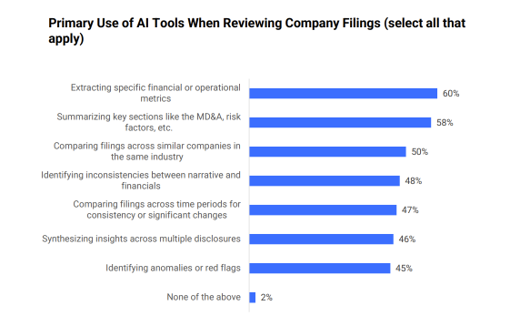
Investors are most commonly using AI on company filings to extract financial or operational metrics, summarize risk factors and compare filings against peer companies in the same industry. They are also engaging AI’s deep analytical capabilities to flag inconsistencies between a filing’s narrative and its financials and compare filings across time periods for unexplained changes.
As investors increasingly utilize AI, well-supported disclosures, clear explanations of performance and risk, and consistency across reporting periods become even more important.
Disclosures that don’t meet these criteria are more likely to draw scrutiny from investors and be amplified in importance through AI-powered analysis.
Investors Continue to Seek Verification on AI
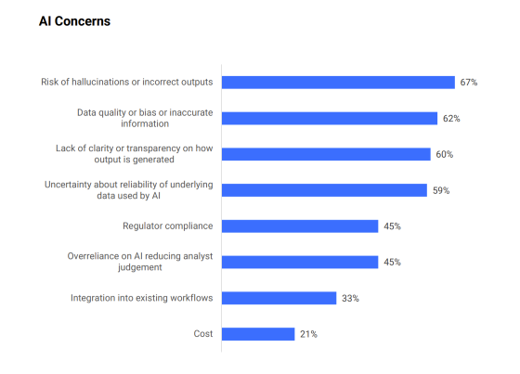
Despite investors’ growing use of AI, they still emphasize the need to verify its outputs. AI introduces new risks, with investors citing data quality, bias or inaccurate information among their top concerns.
In response, investors emphasize a “trust but verify” approach. AI can increase efficiency and surface deeper insights, but human judgment remains critical to making decisions based on company disclosures.
Investors’ approach to AI-driven insights is not dissimilar to the role of the auditor and underscores the continued value of independent assurance over company-reported information. Audit committees should continue to conduct robust assessments of external audit firms and other assurance providers to help ensure investors receive reliable, decision-critical information—whether they are using AI or manually reviewing disclosures.
Questions for Boards and Audit Committees
Growing AI adoption among investors and other consumers of company information signals an ongoing need for boards and audit committees to ensure consistent, comparable disclosures that meet the needs of today’s capital markets.
Audit committees should consider asking the following questions of the external auditor and management about their use of AI and its role in preparing the financial statements:
- How are management and the external auditor using AI, if at all, to identify inconsistencies between financial results and related disclosures?
- What controls and review processes are in place to validate AI-generated analyses or insights used in financial reporting and disclosure activities?
- How are we ensuring the quality, completeness and reliability of data used in AI-enabled processes?
- Would an AI system analyzing our disclosures reach the same conclusions management intends investors to reach?
As investors increasingly incorporate AI into their research and decision-making processes, audit committees have an opportunity to strengthen confidence in company reporting by promoting high-quality disclosures, effective governance and robust assurance over the information investors rely on.
For more on how audit committees are approaching AI oversight: