
Independent directors on the boards of public companies are significantly undercompensated. The responsibilities, time commitment and scrutiny associated with public company board service have increased dramatically; yet director compensation has not kept pace.
The Facts
Many years ago, being an independent director meant quarterly board meetings, a great dinner and maybe a round of golf—and not too many extra required hours of effort.
Compensation included restricted stock and stock options, a country club membership, health insurance and maybe even a “supplemental executive retirement plan.” Directors also commonly received a one-time large company stock grant upon first being elected to the board.
Today, the typical board has five or six regularly scheduled board meetings, many special sessions, numerous committee meetings and a large amount of interaction with company executives outside of regular meetings. Work hour requirements have skyrocketed so significantly that it is difficult to serve on more than one or two boards, particularly if the director is also actively employed as an executive elsewhere.
The transformation of board service would logically suggest a corresponding change in director compensation. Yet while the demands of the role have increased substantially, compensation has continued to grow at a relatively modest pace.
The Data
Independent director compensation has increased between 3 percent to 5 percent annually for many years. Along with this conservative rate of growth (compared to top executive pay), the actual pay components have greatly decreased. Country club perks and health insurance are no longer provided. The equity retainer for most is now exclusively “straight” company stock with a one-year vest, without the upside pay leverage that stock options formally provided. And that “new director” company stock grant has mostly disappeared.
Directors now receive a cash and equity board retainer, a committee chair and maybe committee member fee and a requirement to not sell stock acquired through equity grants until board service has ended. Directors still do not receive “golden parachute” severance benefits if the company is sold (requiring even more work hours) and their board service is terminated.
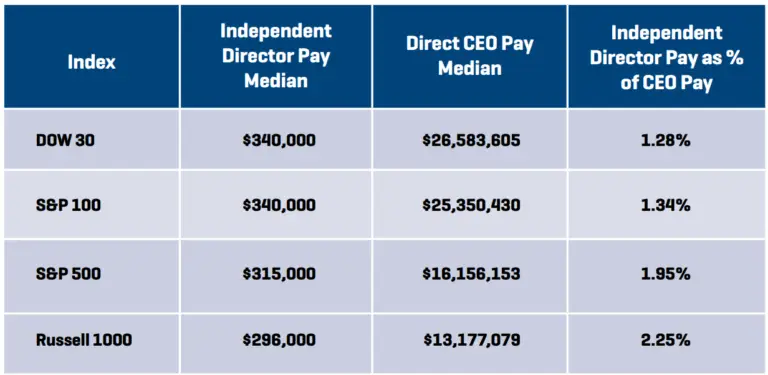
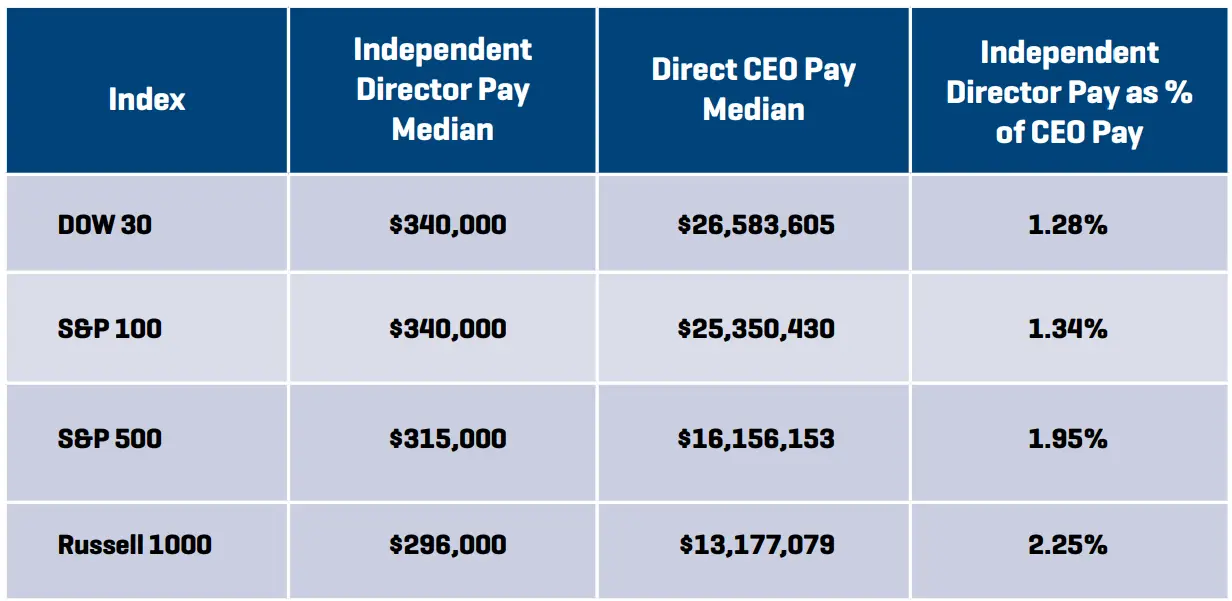
Director and CEO roles are fundamentally different and their compensation is not directly comparable. Even so, the typical independent public company director is now paid annually less than 2.5 percent of the annual compensation of the CEO. And the larger the size of the company (where you would expect there to be more work for directors), this pay ratio decreases to well under 2 percent (see the chart above with corresponding data from ESGauge).
A Solution
Fair pay for services rendered requires an immediate and material increase in compensation for directors serving on public company boards. The most direct way to accomplish this, while also further aligning board member’s interests with those of shareholders (without using pay that is inappropriately tied to financial performance factors, which is heavily used in executive pay packages), is to bring back the one-time “new director” company stock grant. This is akin to a restricted stock unit (the most common annual equity retainer vehicle used for directors). This one-time grant should be material, vest over a longer than one-year time period and reflect actual years of board service. For example, provide a company restricted stock unit grant value of $1 million, which vests ratably over a seven-year period (but is not paid out/delivered until board service ends, to defer income taxation). A vesting schedule of 15 percent at the end of each board year of service would reflect an approximate typical seven-year board service career to achieve fully vested status.
Independent directors of public companies’ current compensation does not match the significant service requirements in today’s board environment. Fair pay for services rendered demands immediate action, and a new director RSU grant with longer-term vesting can be the answer.